
A Nation of Crossings: Understanding Singapore's Multicultural Tapestry

Photo by Pixabay
Step into Singapore, a living cultural tapestry that invites you to experience Chinese, Malay, Indian, and Eurasian traditions all in a single journey. Look no further than Singapore. As we look ahead to 2026, this island nation stands out as a living mosaic of cultures. It's a place where you can explore a bustling Chinatown, a vibrant Little India, and a historic Malay enclave all in a single day. This isn't just a melting pot; it's a carefully curated tapestry of Chinese, Malay, Indian, and Eurasian heritage, creating a singular, unforgettable national identity. Are you ready to explore the crossroads of Asia?
From Colonial Outpost to Global Hub
To understand Singapore today, you have to look at its past. Founded as a British trading post in 1819, its strategic location attracted immigrants from across Asia. This colonial history laid the groundwork for a multicultural society and established English as a common language. After gaining independence in 1965, the nation consciously worked to forge a single identity from its diverse population, a project that continues to define its success. As of June 2025, Singapore's total population stood at an estimated 6.11 million.
The Four Pillars of Singaporean Identity
The nation's social fabric is woven from the threads of its four main ethnic groups, based on the resident population figures (citizens and permanent residents):
Chinese: Making up the vast majority at approximately 75.5%, the Chinese community has profoundly shaped Singapore's business culture and cuisine. You'll see their influence everywhere, from the bustling streets of Chinatown to the vibrant celebrations of Chinese New Year (February 17-18, 2026).
Malay: As the indigenous people of the region, the Malay community's heritage is deeply embedded in Singaporean life, comprising about 15.1% of residents. Their language is one of the four official languages, and their influence is most prominent in the culinary scene and the historic Kampong Glam district.

*Photo by Dao En Wong
Indian*: Singapore's Indian community, primarily from Southern India, has enriched the nation with its vibrant festivals, like Deepavali (November 8, 2026), aromatic food, and colorful temples that stand as landmarks in areas like Little India. They form about 7.6% of the resident population.
Eurasian (and Other): This unique community, with mixed European and Asian ancestry, is included in the Other ethnic group, which makes up about 1.8% of the resident population. They add another distinct flavor to Singapore's cultural mix, influencing everything from music to food.
Speaking the Lingo: English and Singlish
While English is the language of business and administration, connecting everyone, the true soul of Singaporean conversation is Singlish. This colloquial creole is a blend of English with phrases from Hokkien, Malay, and Tamil. Don't be surprised to hear locals use words like "lah" or "shiok". Listening to Singlish is listening to the nation's history in real-time.
Stepping into Living History: Heritage Districts for 2026
Singapore's past isn't confined to museums. It's alive in its heritage districts.
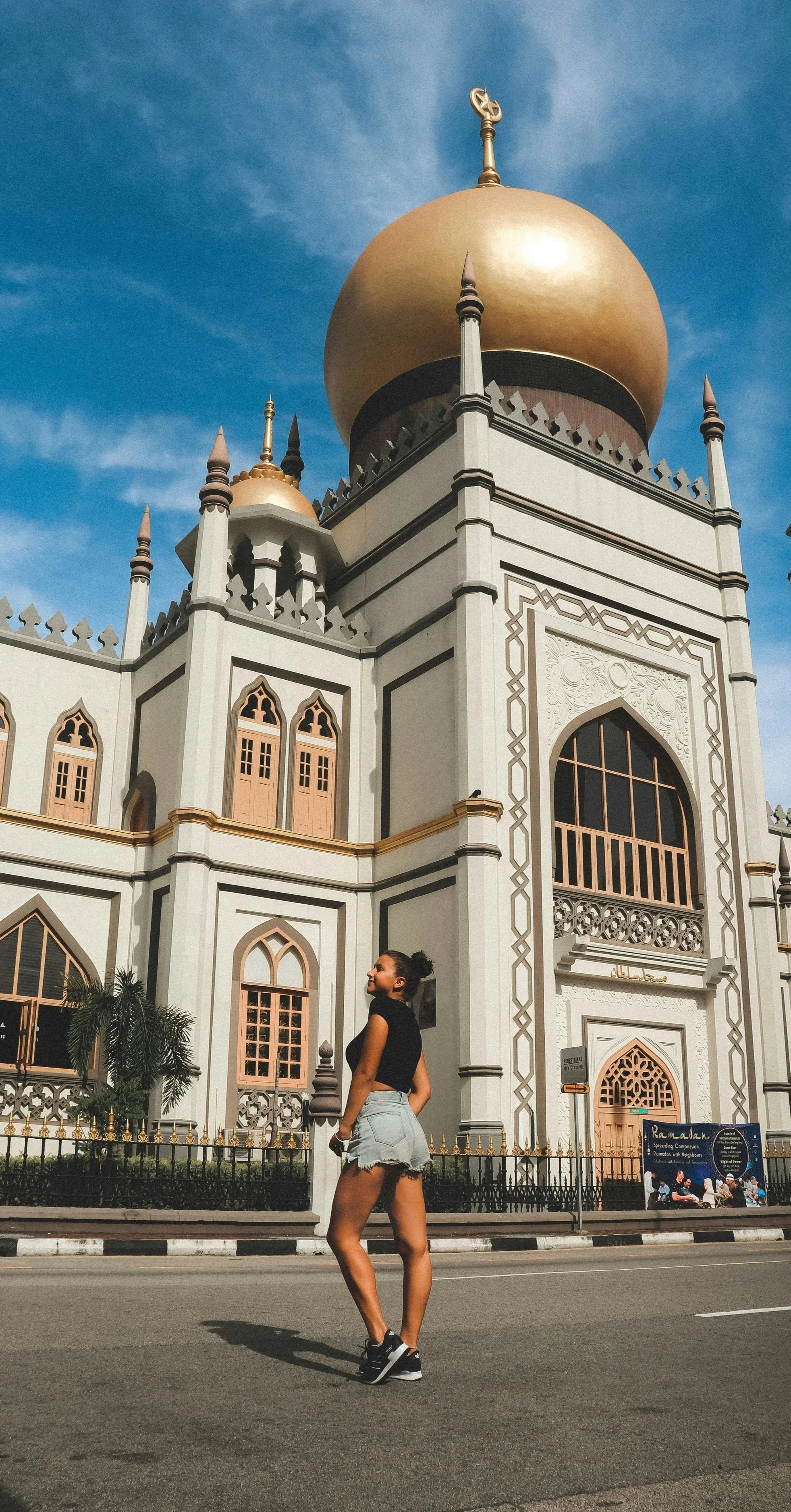
*Photo by Palu Malerba
Kampong Glam*: The historic heart of the Malay and Arab communities, this area is a captivating mix of old and new. The golden dome of the Sultan Mosque is the area's anchor, while the narrow, mural-filled Haji Lane is famous for its independent boutiques and trendy cafes. It's a perfect example of how heritage and modern coolness coexist.
Joo Chiat: Get your camera ready for the pastel-hued Peranakan shophouses of Joo Chiat. This area is a celebration of the unique Peranakan (Straits-born Chinese) culture. Its blend of heritage boutiques and trendy new openings continues to make it a globally recognized and vibrant neighborhood where you can discover incredible food and one-of-a-kind shops.
A trip to Singapore in 2025 is more than a vacation; it's an education in cultural harmony. It’s a place where you can start your day with a traditional Malay breakfast, visit a Hindu temple, explore a trendy boutique in a historic shophouse, and end with dinner in a world-class restaurant. The nation's strength and beauty lie in this incredible blend of influences. Intrigued by the land's history? Read other blog posts about Singapore or call our agents today at Go Beyond Travel to start your travel plans today.
#Singlish #PeranakanCulture #ColonialHistory #KampongGlam #RacialHarmony #EthnicGroups
📦 Key Takeaways
The Chinese community makes up the largest segment, accounting for approximately 75.5% of citizens and permanent residents.
The Malay community forms about 15.1% of the resident population, while the Indian community is approximately 7.6%. The Other group, which includes Eurasians, makes up about 1.8%.
English is the official language for easy navigation, but listening to the rhythms of 'Singlish' offers a deeper cultural insight.
Planning your 2026 trip around major cultural festivals, such as Chinese New Year (February 17-18, 2026) or Deepavali (November 8, 2026), can offer a richer, more immersive travel experience.
