
The Ultimate Seoul Food Tour: From Viral Street Eats to Michelin Stars
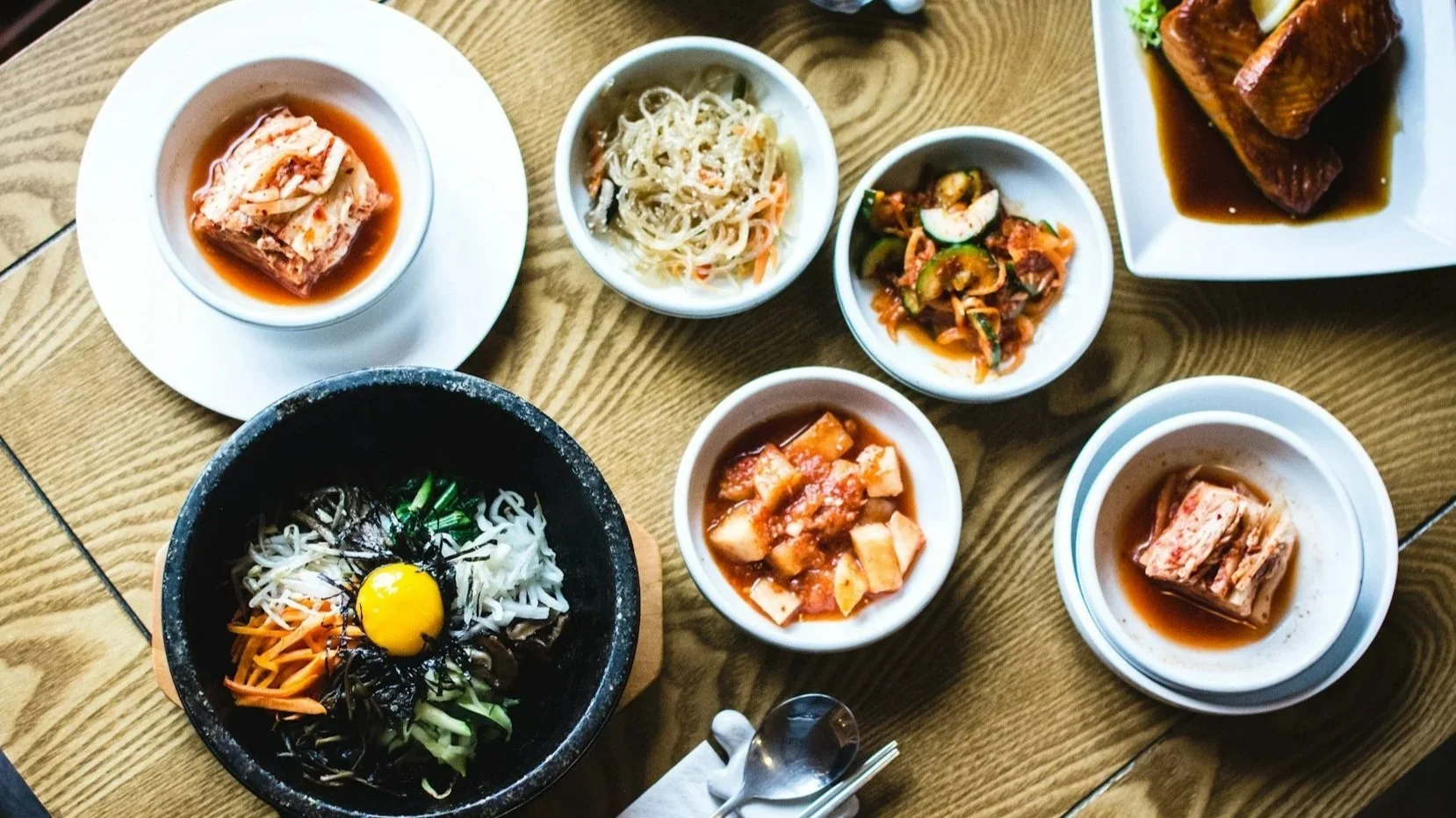
Photo by Jakub Kapusnak
Picture yourself under the neon glow of a Seoul night market, the sizzle of spicy rice cakes in the air and the crisp pop of a cold beer in your hand. If you’ve been dreaming of South Korea, 2026 is officially your year to go. With visa-free entry extended and a culinary scene that’s blending ancient tradition with futuristic tech, planning your trip can feel like a lot to digest—but that’s where we come in. Whether you're a digital nomad looking to camp out in Seongsu-dong’s chicest cafes or a foodie chasing the 'Netflix Lady' at Gwangjang Market, this guide covers everything you need to know for your 2026 culinary adventure.
2026 Travel Logistics: What You Need to Know
Before you pack your bags, there is great news for your wallet and your schedule. The South Korean government has extended the K-ETA exemption through December 31, 2026, for travelers from 67 countries, including the U.S., Canada, and the UK. This means you can skip the application fee and the paperwork for a smoother entry.
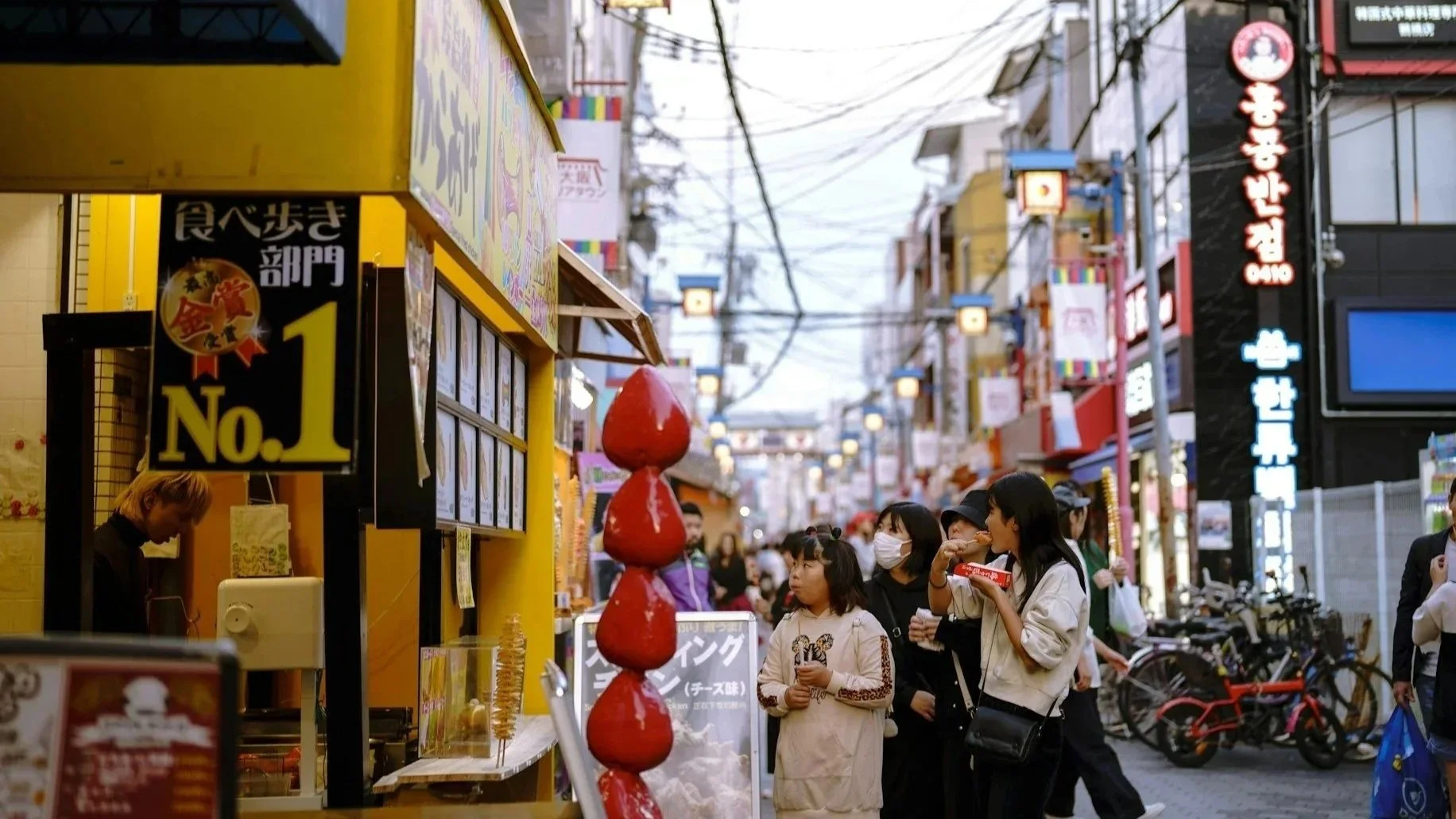
Photo by Yuka Tanaka
If you're planning a longer stay, the Workation (Digital Nomad) Visa is now fully active. You can spend up to two years working remotely from Seoul’s world-class cafes. While dining prices have seen a slight 3–5% increase, Seoul remains surprisingly accessible:
Street Food: 4,000–8,000 KRW ($3–$6) per item.
Mid-range Dining: 20,000–35,000 KRW ($15–$26) per person.
Fine Dining (Hanjeongsik): 150,000+ KRW ($110+) for a royal experience.
The Summer Highlight: Daegu Chimaek Festival 2026
If your 2026 travels bring you to Korea in July, you cannot miss the Daegu Chimaek Festival (July 2–6, 2026) at Duryu Park. The term 'Chimaek' (Chicken + Maekju/Beer) is a cultural pillar, and 2026 is all about the 'Healthy Pleasure' trend. Expect to find zero-sugar and gluten-free batter options paired with local IPAs. The projected viral hit for the season? The Chimec Ice Pub, where you can dip your feet in ice-cold water while devouring spicy fried chicken.
Gwangjang Market: Tradition Meets 2026 Tech
Gwangjang Market is evolving. While the legendary Gohyang Kalguksu (the 'Netflix Lady') is still serving her famous noodles, the market now features high-end corporate-backed spots. Don't miss the Starbucks Gwangjang, which offers a market-exclusive Honey Hotteok Latte.
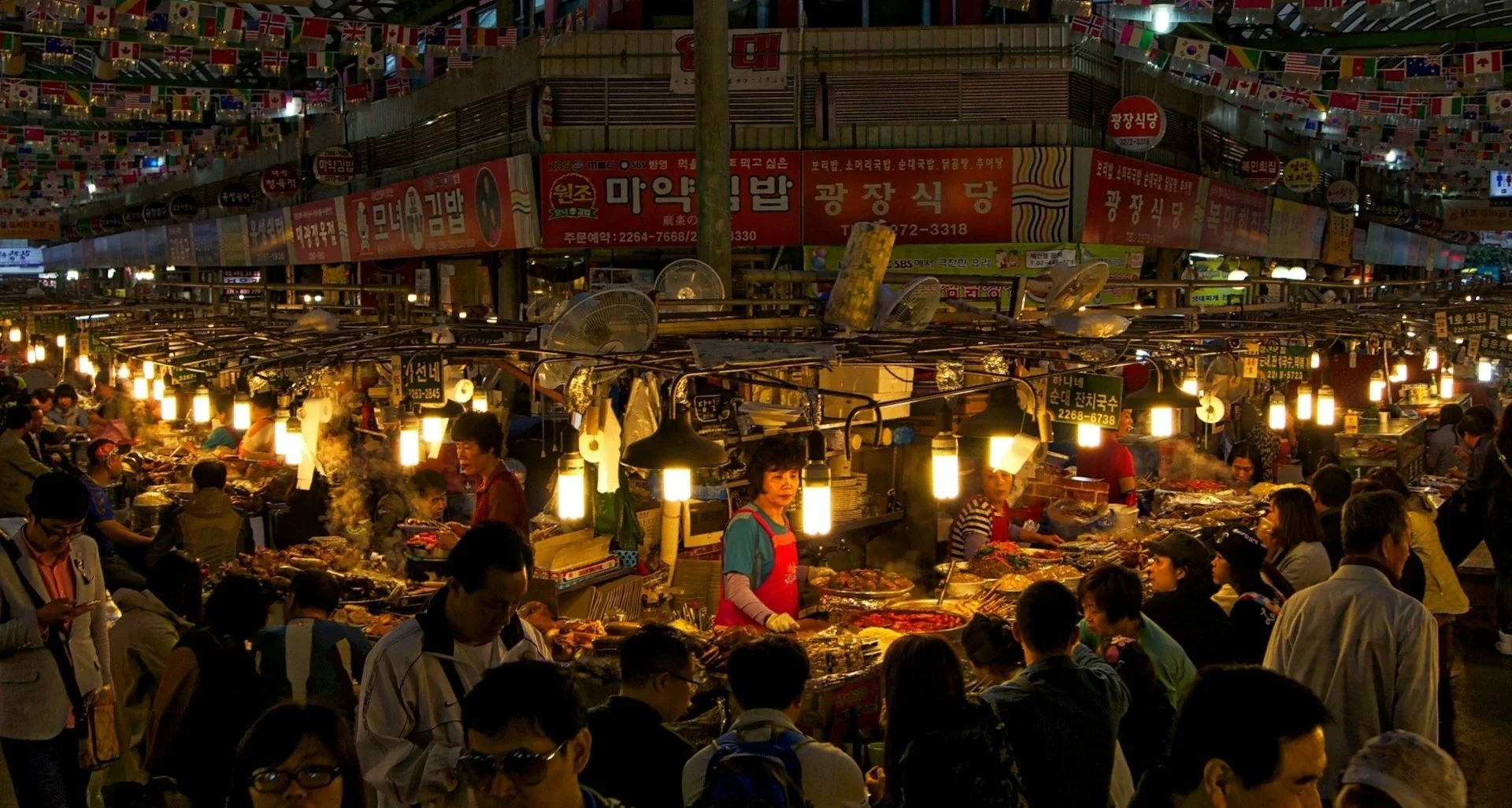
Photo by Mike Swigunski
Worried about 'tourist pricing'? 2026 marks the full implementation of Fair Price signage and QR-code menus across the market, ensuring transparency for every visitor. For dessert, the 2026 'must-waits' are Abebe Bakery for Jeju-style cream buns and the industrial-chic Cafe Onion Gwangjang.
Hanjeongsik: Dining Like Royalty
In 2026, the fine-dining scene is focused on 'Sikchi'—the philosophy of food as medicine. For a modern take on this, book a table at Jungsik in Gangnam. If you prefer research-based, authentic royal court cuisine, Onjium in Jongno is the gold standard for the 2026 season.
For a more casual yet iconic meal, head to the Bukchang-dong Soon Tofu (LA Bukchang-dong) flagship. Their high-protein tofu stews served in stone pots are the epitome of the 'healthy-pleasure' movement that defines Korean dining this year.
Seongsu-dong: The Experiential Cafe Capital
Known as the 'Brooklyn of Seoul,' Seongsu-dong has transitioned from simple cafes to 'Experiential Flagships.' Visit MM Seongsu for revolving K-Beauty and K-Drama pop-ups, or the architecturally stunning Blue Bottle Seongsu.
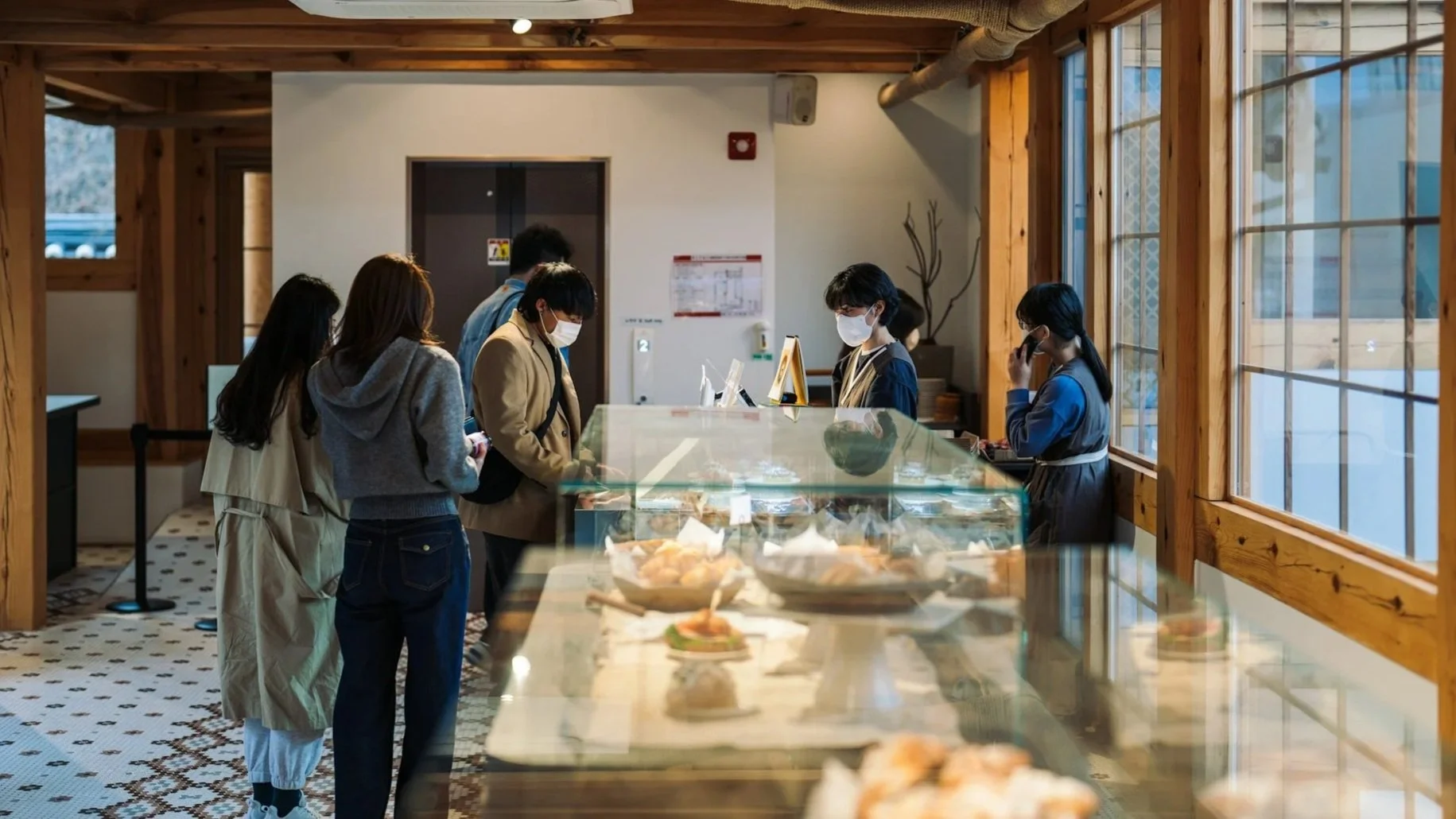
Photo by rawkkim
Pro-Tip: Waiting times in Seongsu-dong can exceed two hours on weekends in 2026. Be sure to download the Catch Table Global app to manage your reservations and digital queues like a local.
Planning a trip to Seoul in 2026 offers a unique blend of historical flavor and modern convenience, but navigating the latest trends and reservations can be overwhelming. Don't let your taste buds wait! Talk to an agent today to book your flight and lock in your culinary adventure at the best price available this week. Contact Go Beyond Travel for a personalized consultation and let us craft the perfect itinerary for your Korean journey.
#KoreanFood #StreetFood #SeoulEats #KoreanBBQ #FoodieTravel
📦 Key Takeaways
K-ETA visa-free entry for 67 countries is officially extended through December 31, 2026.
The Daegu Chimaek Festival is set for July 2–6, 2026, featuring the viral 'Ice Pub' experience.
Gwangjang Market has modernized with standardized QR-code menus and new 'heritage' corporate hubs like Starbucks Gwangjang.
Seongsu-dong remains the 'Brooklyn of Seoul,' requiring the Catch Table Global app for 2026's most popular spots.
The 'Sikchi' (food as medicine) trend is dominating the high-end Hanjeongsik scene.
