
Beyond the Bratwurst: A Foodie’s Guide to Modern Germany
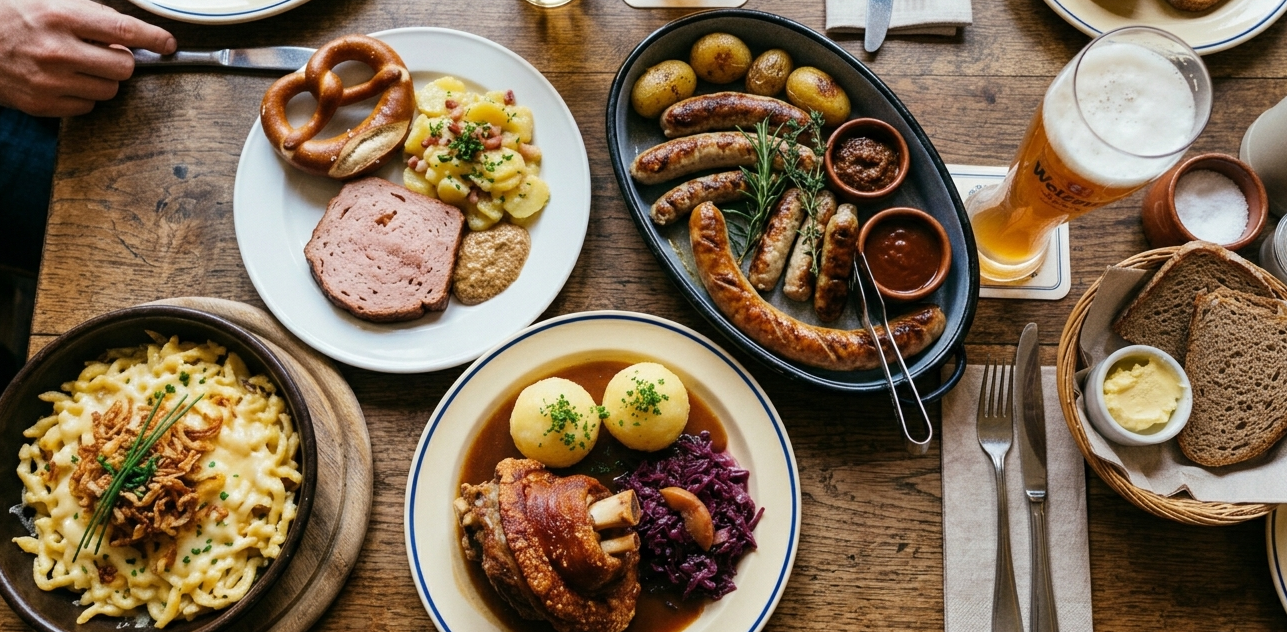
You probably already picture bratwurst and beer when you think of Germany — but a full culinary map reveals coastal fish sandwiches, sweet-sour braises, pillowy egg noodles and a thriving organic scene. Planning a 2026 trip? Between an expected ETIAS entry change, festival calendars and sustainable-dining signals, there’s a lot to keep straight. This guide puts the regional flavors and practical planning tips you need in one place so you can turn appetite into an easy, unforgettable itinerary.
Why Germany’s food scene feels both familiar and surprising
Germany’s culinary identity is regional at its core. Historic states, climate and local agriculture produced recognizable local staples — and that’s great news for you: each city, town and region can feel like its own tasting menu.
🦞 Northern coast: grab-and-go seafood culture
What to try: Fischbrötchen (a crusty roll filled with herring/Matjes, onions, pickles and remoulade).
Where to experience it best: port towns and harbor stands from Hamburg to Kiel. Time your visit for Kiel Week (June 20–28, 2026) for festival seafood stands and a vibrant maritime atmosphere.
Tip: Fischbrötchen are designed for walking; bring napkins and enjoy the harbor views.
🥣 Rhineland / West: sweet-sour comfort and braises
What to try: Rheinischer Sauerbraten — a marinated, slow-braised beef with a sweet-sour profile, often served with dumplings or Spätzle.
Why it matters: this region’s cuisine emphasizes hearty, slow-cooked dishes rooted in local produce and historical recipes.
🥘 Swabia / South (Baden-Württemberg & Allgäu): egg noodles and cheese
What to try: Spätzle and Käsespätzle — soft, hand-pressed egg noodles tossed with bubbling cheese and fried onions.
Local flavor note: southern Germany celebrates simple, comforting ingredients; Käsespätzle is a staple for chilly afternoons.
🍽️Berlin: the globalized street-food capital
What to try: Döner kebab sandwich — transformed in Berlin into an on-the-go format in the early 1970s and now a national icon.
Context: Berlin’s döner is part culinary innovation, part social history tied to Turkish guest-worker communities. Ongoing naming and heritage discussions keep it in international food media — making a döner crawl in Berlin both tasty and culturally interesting.
☕ Daily rituals and sweet pauses
Kaffee und Kuchen: A daily pause for coffee and cake remains central — visit a Konditorei (pastry shop) for fresh pastries and regional cakes. It’s a relaxing way to punctuate a day of museum-hopping or market strolls.
Sustainability, organic momentum and where to look in 2026
BIOFACH 2026 (Nuremberg, Feb 10–13) is the major trade fair where organic and sustainable food trends are showcased — an excellent touchstone if you care about farm-to-table and organic dining.
The MICHELIN Green Star functions as a consumer-facing signal for sustainability-minded restaurants across Germany. If ethical sourcing matters to you, look for Green Star listings in major-city dining guides.
Practical planning for a 2026 tasting trip
Entry & timing
ETIAS: Expected to begin in late 2026 (Q4) for visa-exempt travelers to Schengen. Because rules and timing can shift, check official EU and German government sources while you book.
Getting around and budgeting
Deutschlandticket: Priced at €63/month in 2026 for regional trains and local transit — an affordable way to stitch together regional-food day trips between cities and towns.
Suggested approach: Use a city as your base for 2–3 days and take short regional-train hops for specialty tastings (coast, southern villages, Rhineland towns).
Festival and event highlights (2026)
Kiel Week (June 20–28, 2026): Perfect for northern seafood and harbor-festival energy.
BIOFACH (Feb 10–13, 2026): The place to track organic/sustainable food movement developments.
Practical tasting tips and etiquette
Eat like a local: try snacks standing at market stalls in port towns, reserve time for Kaffee und Kuchen midday, and seek out Konditorei for regional pastries.
Ask before photographing food in small family-run restaurants or at tables with other guests.
If you’re targeting sustainability: check MICHELIN Green Star listings and local organic markets — they often have producer meetups and tastings.
Sample 5-day micro-itinerary (taste-focused)
Day 1: Berlin street-food crawl — döner, market snacks, an evening Konditorei stop.
Day 2: Regional train to Hamburg — harbor Fischbrötchen and a waterfront stroll.
Day 3: Head south (overnight train if desired) to Baden-Württemberg — Käsespätzle in a village guesthouse.
Day 4: Rhineland day trip — Sauerbraten and local dumplings.
Day 5: Sustainable dining experience in a city with a Green Star restaurant, or sync your trip with BIOFACH if traveling in February.
Planning note: With the Deutschlandticket (€63/month), these hops are more budget-friendly—perfect if you prefer food-focused travel over expensive long-distance rail passes.
Germany in 2026 is equal parts regional tradition and forward-looking food culture — from Fischbrötchen at a Kiel harbor stall to Green Star restaurants and BIOFACH’s organic innovations. If the details feel overwhelming, that’s normal: mapping the right cities, dates and transit options takes work. Is your palate ready for a culinary tour? Contact Go Beyond Travel for a personalized consultation to map your food walk through Germany’s markets and restaurants. And before you go, leave a comment with your favorite German treat — we’d love to hear what you want to taste first.
#GermanFood #CulinaryTravel #KaffeeUndKuchen #EatLocal #FoodieAdventures
📦 Key Takeaways
Germany’s food identity is intensely regional: Rhineland braises, Swabian Spätzle, and North Sea/Baltic fish snacks are distinct must-tries.
Berlin transformed the döner kebab into a global street-food icon in the 1970s; debates about its heritage keep it in the spotlight.
Kiel Week (June 20–28, 2026) is the best time to experience northern seafood culture and Fischbrötchen on the go.
BIOFACH 2026 (Feb 10–13) and the MICHELIN Green Star label show sustainability and organic cuisine are central travel trends.
Budget-friendly regional travel is feasible with the Deutschlandticket (€63/month in 2026) for local trains and transit.
ETIAS is widely expected to begin in late 2026—monitor official sources as you finalize travel plans.
